
Sometime during the mid-1850s, Mark Linfield (1825-1909) moved with his young family to the town of Ventnor, on the Isle of Wight. Mark was a linen draper1 by trade, and in the 1851 census he is recorded as such at 1, Albert Terrace in Camberwell, with his sister Jane and younger brother Stanford Frederick (1829-89), also a linen draper. Mark and his siblings were all born in Storrington, West Sussex and were the youngest three children of William and Harriet Linfield (née Stanford) who were married in 1803. Both Mark’s father, and grandfather Peter Linfield (1734-91), were farmers and butchers in Storrington, a trade followed by his older brother, Thomas (1812-84). Sadly for Mark, Jane and Stanford, they were orphaned when both their parents died in 1835. They were all still very young – Mark was ten, Jane 12 and Stanford only 6 – so they began life with a distinct disadvantage. They were brought up by older siblings, who no doubt wanted to relieve themselves of the financial commitment as early as possible. And so, by 1841, at the age of 15, it is hardly surprising that Mark is working as an apprentice to Henry Marshall, draper of High Street, Steyning. Continue reading The Isle of Wight Linfields
Category Archives: Lin(d)field History
The Linfields of Coolhurst – an Update
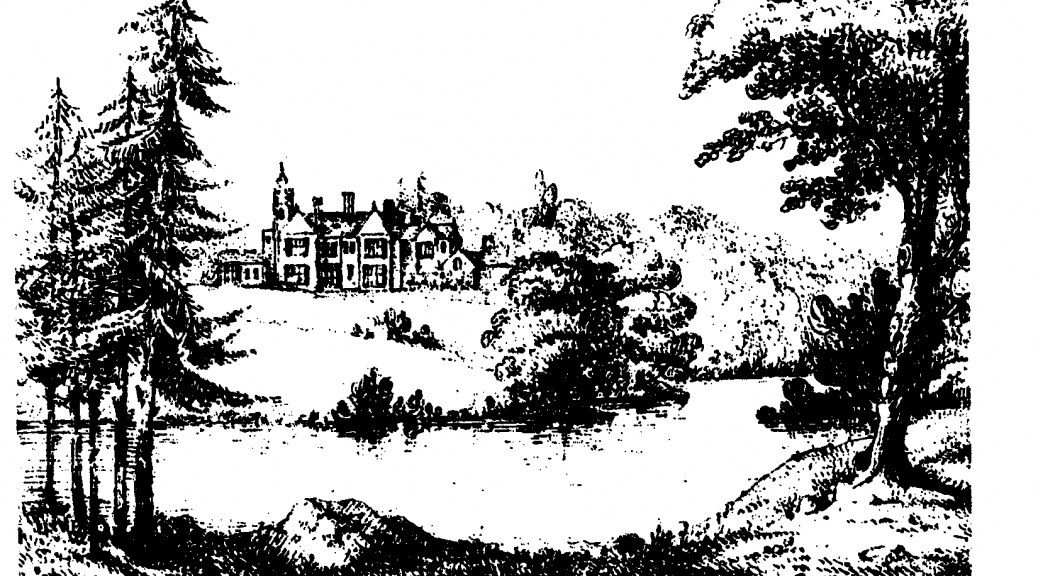
Following the recent publication of my article on the ‘Linfields of Coolhurst’1, I decided to write an adapted version for Horsham Heritage, the journal of Horsham Museum and Horsham Museum Society. Since I would need to write something of interest to a more general audience, it was necessary to exclude many of the family history details. The process of re-writing this article – with useful guidance from Sue Djabri of the Horsham Museum Society – proved to be a very interesting exercise in itself, leading, in fact, to a fundamental re-assessment of some of the ideas expressed in the original. The version which appears in Horsham Heritage2 is therefore rather different to the one which appeared in Longshot. The purpose of this article is to discuss some of the main differences and the reasons behind them, and to look at one or two new ideas which evolved during the process. Continue reading The Linfields of Coolhurst – an Update
The Linfields of Lyndhurst Road, Worthing
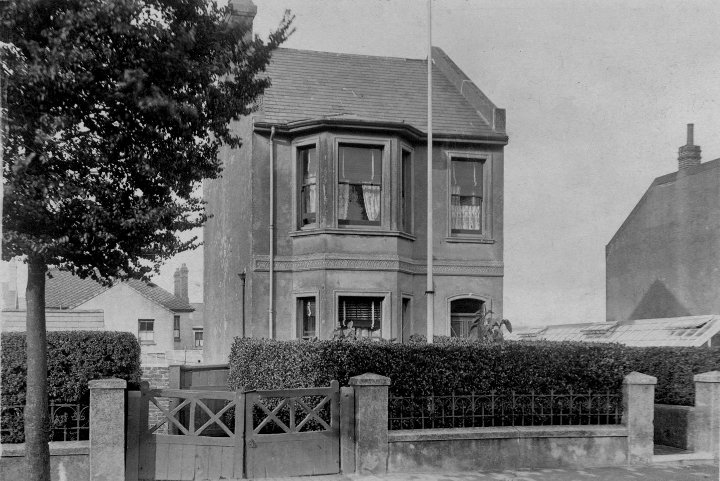
Previous articles have been written in this journal about Arthur George Linfield, fruit grower and nurseryman, of Worthing in Sussex and his younger brother, Frederick Caesar Linfield, corn merchant of Worthing and local politician who eventually became a Liberal Member of Parliament. In this article, I intend to write about their elder brother, William Henry Linfield and his family, who lived in Lyndhurst Road near Worthing Hospital. Continue reading The Linfields of Lyndhurst Road, Worthing
Retained Fire Service Experiences
My first involvement with the Fire Brigade came as a ‘messenger’ at the age of fifteen. There were three of us and our job was to call the firemen during the ‘quiet hours’ between 11pm and 7am. We were called by someone from Fire Control which was then based at the home of the Chief Fire Officer, Charles Mant in Church Street. The messenger’s job was then to go by bicycle and each call two or three firemen who would then respond to the call.
The station was then in West Street opposite Greenfield’s grocery shop (now Bunce’s). It was of timber construction with a corrugated iron roof and was very cramped, both for the men and machines. On responding to a call, entry was gained through the front doors and then down a narrow passage to the kit room. It became quite chaotic after the first two or three arrivals because once you had obtained your fire kit, you then had to go back down the same passage to the appliance room, meeting the man still going in the opposite direction!
On reaching the age of eighteen, the Second World War having started, I joined the Royal Navy. After initial training at Portsmouth and further training as a Radar Operator in the Isle of Man, I was posted to HMS Newcastle (a Cruiser) which was despatched to the Far East to take part in the war against the Japanese. We returned after three years and at the end of the war I was demobilised, returned to the Isle of Man and got married.
My wife and I stayed in the island for almost six years and then together with the children returned to Storrington to live. One day soon after our return I met Mr. Mant, chatted for a while and was then persuaded to re-join the Fire Brigade as a fireman.
The station was still in West Street and the machines consisted off a wheeled escape and a Bedford towing vehicle with a trailer pump. On the escape, the cab was only big enough for the driver and officer in charge so that the remainder of the crew had to ride outside holding on to the escape. This wasn’t too bad in the summer but bitterly cold during the winter.
The fire siren was situated on top of the Chanctonbury RDC offices in Church Street. This operated between the hours of 7am and 11pm; for the quiet hours, each fireman had a large bell installed by the GPO – mine was situated in the bedroom.
One day we had a fire call when a minor disaster occurred. Joe Boxall was opening the appliance room doors, which folded back in concertina fashion and were partly glazed, when the hinges pulled away from the frame and the whole lot collapsed into West Street!
Many calls were quite mundane, but others, of course, were of a much more serious nature. The serious ones that spring to mind are the Rivoli Cinema, Worthing; Marringdean Manorhouse, Billingshurst; Woolworth’s at Bognor (these two were attended from the new station in School Hill); and the kitchens and dining-room at Barn’s Farm Camp.
Road traffic accidents were invariably serious and very stressful, particularly when children were involved. One of the worst was on a lovely summer evening when we responded to a call at Dial Post. There we found that the turntable ladder from Worthing, responding to a call from Gatwick airport (which turned out to be a false alarm) had lost control on a bend and crashed head-on with a small family saloon. Out of a family of four – husband and wife and two children – only one child survived.
Having to combine one’s job with being a retained fire-fighter could be quite stressful at times, particularly during late night or early hours of the morning calls. One had to adjust very quickly from a deep sleep, jumping out of bed, throwing on some clothes, driving to the fire station and dealing with a complexity of emergency calls.
However, some very good results were achieved and a great deal of satisfaction gained.
During my twenty-nine years service, I attended over three thousand calls and over those years was promoted to Leading Fireman, Sub-Officer and finally Station Officer in charge, a post I held for fourteen years until retirement.
The Linfields of Coolhurst
Photographs – Precious Records of the Past
Over the years, I have been very fortunate to acquire a fairly large collection of old photographs, not only of the Linfields but also of my grandmother’s family, the Ballards. Many of these photographs go as far back as the 1860s and are obviously very precious heirlooms. It is remarkable that so many have survived, and I am immensely grateful to those relatives in previous generations who had the foresight to ensure their preservation.
A few of these photographs are interesting to a much wider audience since they relate to events of local historical significance. For instance, there is a formal group of various people including nurses and patients outside the front of a building (see Figure 1, centre pages). Two of the patients are children, and they are sitting on the laps of nurses seated along the front row. I could also recognise my great-grandfather,Arthur George Linfield (1859-1938) and his younger brother, Frederick Caesar Linfield (1861-1939), one time Mayor of Worthing and Liberal Member of Parliament.
 Figure 1: the temporary hospital set up by the Worthing Methodists at the ‘Hollies’ in 1893. Arthur George Linfield, Fruit Grower is standing (holding chair) second from the right. His brother, Alderman Frederick C. Linfield, Corn Merchant, is standing in the middle row, 5th from the left, with his right hand resting on a chair.
But why were they there? The picture was apparently framed at some point, so it was obviously a picture of some importance to its original owner, Arthur Linfield. I have concluded from the evidence that it probably shows one of the temporary hospitals set up at the time of the Worthing typhoid epidemic (see article: ‘The Worthing Typhoid Epidemic of 1893’, Longshot Vol. 4 No. 2, December 1995). Some of the patients are wearing caps, presumably to cover their bare heads, loss of hair being one of the effects of the fever or the drugs being used. The Methodists set up a number of hospitals in response to the crisis in the town, and the presence of my great-grandfather and his brother would indicate that this was one of them. Interestingly enough, the building is still there: called the “Hollies”, it stands at the very top end of Worthing High Street and was built about 1810 using the local yellow brick. It also features in the backgound of what is arguably the best known photograph of the Worthing typhoid epidemic, which shows people collecting water from a large portable tank – all the mains water was contaminated (see Figure 2, centre pages). I am currently trying to identify the other people in the photograph.
 Figure 2: one of the 200 gallon portable water tanks set up to provide Worthing’s inhabitants with fresh drinking water. The ‘Hollies’ can be seen in the background; Peggy Champ always thought that the figure standing on the opposite side of the road, looking towards the tank, was her grandfather, Arthur Linfield.
However, I digress. I would like to say something about an interesting album of photographs, which were taken in the early 1950s. It is, in effect, a photographic survey of the main business activities of the Sussex firm of A.G. Linfield Ltd., growers of Thakeham in West Sussex. This record is dedicated to A.G. Linfield, eldest son of the founder and the pictures were taken by his grandson, David Rucklidge. Although the date ‘1948’ has been entered in pen towards the end of the book (on a note thanking David for his efforts in compiling the album), I believe that many of the photos were actually taken in 1951 – perhaps all of them – since speaking to a former employee.
These photographs focus on the mushroom growing activities of the business during a period of rapid growth. However, what is particularly interesting is that they were taken at a point in time just beforemajor technological and cultural innovations completely revolutionised the whole system of mushroom production in the UK. All the photographs were taken at Thakeham, at Chesswood and Willmer’s nurseries, and at the Abingworth nursery which was a former dairy purchased in 1944. Although they show tractors and trailers being used to carry mushroom compost to the various growing houses, virtually everything else was done by hand. And from looking at the pictures, it must have been extremely hard work! Extensive mechanisation during the 1950s was the key to significant increases in productivity which transformed the fortunes of the family firm and made mushroom growing its most important commercial activity.
Mushrooms had always been grown by the business, in the early days as a catch crop and to keep the workers occupied during the winter months. At Thakeham a number of purpose built houses were erected as soon as the farm was purchased in 1913, and throughout the inter-war years some three acres of outdoor ridge beds were also cultivated during the Summer and Autumn. Mushroom growing was given a tremendous boost during the 1930s by the development in the USA of “pure culture spawn” which removed part of the risk and uncertainty of crop failure due to poor spawn. Previously growers had to look out for mushroom mycelium growing in old piles of manure or in stables. They would bring it home and plant it immediately in the prepared compost or into a protected bed to grow on and serve as a source for the future. This, then, was by definition a risky business: the grower would have no idea how productive his spawn would be or even what his mushrooms would look like when they appeared! If he had found a particularly productive strain, he would try and perpetuate it for as long as possible by replanting some in his special bed. Sooner or later, his strain would weaken and need replacing by a new one.
There was therefore a great diversity of strains. Colours would have varied from light tan to very dark brown. Whatever their colour, there would have been few problems selling them since the demand was always much greater than the supply, making mushrooms a luxury crop commanding a high price. Interestingly enough, the white strains, which are by far the most common varieties available in the shops today, would have been unheard of before the advent of “pure culture” spawn. Apparently it was from a pure white mutation which occurred in 1926 or 1927 on a mushroom farm in Pennsylvania that all the current white strains owe their origin.
The war years saw a virtual cessation of mushroom growing in this country. Linfields’ still managed to grow the odd crop, no doubt to take advantage of the very good prices they could fetch. But most of the firm’s activities were geared up to the production of vegetables to support the war effort, and I have a number of detailed cropping plans showing how the glasshouses and fields were being used to achieve this. During August 1943, the Minister of Agriculture, R.S. Hudson visited the business to see what was being done and a number of photographs were taken by George Garland to record this event (these can be seen at the West Sussex Record Office).
After the Second World War, Linfields’ made a concerted effort to expand its production of mushrooms and the photographic collection shows in vivid detail how this was being achieved during the late ‘40s and early ‘50s. Improvisation and the ingenious conversion of existing facilities seem to have been the order of the day. Therefore glasshouses were covered with insulated panels or sheets containing glass-fibre, and there is a sequence of photos showing this. Wire netting was used to hold down the material across the top of the glasshouses, whilst wooden lathes were used on the sides and ends. The metal frames of old army beds were used to create a three-tier system of shelving to carry the mushroom beds in the houses (there would have been an enormous surplus of these immediately after the war) whilst the supports came from Worthing’s sea defences! But there were also growing houses where the mushroom beds were made up along the floor. Many photos show some very respectable crops of good quality white mushrooms (see Figure 3 below). Even some of the vehicles were ex-army – for instance the lorry which carried the boxes of harvested mushrooms to the packing shed.
 Figure 3: Inside one of the greenhouses – now a mushroom shed!
Many of the converted glasshouses had previously been used for growing tomatoes, an important wartime crop. Not all the adaptations were quite as successful: there is a photograph inside a glasshouse showing how black polythene was suspended over the tomato support wires in order to exclude the light. However, the material is riddled with holes (perhaps this was deliberate – to provide some light and ventilation!)
Not all the mushrooms were grown in these adapted structures. There are a number of pictures showing some of the purpose built houses, typically half-round in shape with curved asbestos panels forming the roof. The oldest buildings were situated at Jack Willmer’s nursery; built during the early years of the First World War, these originally had a thatched roof (excellent for insulation) and were too low to support any form of shelving – so the mushroom beds were laid out along the floor. I have some early photographs taken in March 1917 of a crop of mushrooms being harvested in one of these structures. Since mushrooms do not produce chlorophyll, they do not require light; and as they grow best in cool temperatures with a reasonable humidity, glasshouses are not ideally suited for their cultivation. However, this did not prevent growers’ using them during the colder months to obtain the odd crop of mushrooms – especially with the prices they could command.
During the late Forties and throughout the Fifties, Linfields’ were very much the leaders in their field. By obtaining the best advice then available from international experts and adopting the latest technology, Linfields’ were able to expand their production to levels previously unheard of. By 1957, they were producing 7.5 million lbs per annum, having purchased Lyons Farm nurseries in Worthing from H.A. Pullen-Berry the previous year. Some 4 acres of glass were converted to mushroom production in a matter of months.
There were two major developments during the early Fifties that enabled Linfields’ to make such rapid progress: (1)the adoption of new cultural methods, and (2) a sophisticated system of mechanisation. Both were inspired by a formidable duo who revolutionised mushroom growing after the war, Dr. Jim Sinden of Penn State University and Mrs Erica Hauser of Gossau in Switzerland. Dr Sinden first came to England in 1947 when he addressed a meeting of growers in West Sussex. However, before considering these developments and their impact in more detail, we need to take a closer look at the old growing system so admirably illustrated in the album.
Some 136 photographs have survived in total; unfortunately, a small number have disappeared and probably fell out when the original adhesive started to break down. The opening sequence was taken at Willmer’s nursery, showing a panoramic view of the site and some close-ups. The buildings are all shapes and sizes, but the very low ones must have been the originals built about 1914. One picture shows what initially looks like an old steam locomotive – in fact it a portable steam boiler, used to sterilise the mushroom houses between crops. It may also have been used to inject some steam into the houses immediately after filling to boost the compost temperature – this would speed up the “sweating-out” process to eliminate or reduce any lingering insect pests or moulds. The high compost temperatures in the middle of the beds (ideally around 140 degrees F) would drive out any pests, which could then be eliminated in the room by another injection of steam or a fumigant. The pictures are not in any particular order, but the whole production process – from compost preparation to the packing shed – is fully shown.
Introducing some form of order to the processes depicted in these photographs takes us initially to the compost shed. The whole business of growing mushrooms starts here where the various “ingredients” – traditionally stable manure and wheat straw, from a time when there were plenty of horses – are formed into a heap which is liberally soaked with water. This encourages vigorous bacterial activity, causing the heap to warm up which begins to soften the straw. A few days later, the stack is broken apart and the compost re-formed into windrows, originally quite wide (I believe up to 12 feet across) but reduced by Sinden to dimensions of 6 feet in height and 6 feet in width. In 1951, the composting at Thakeham was carried out under cover in a large shed at Town House Farm. A couple of barns were also used for this purpose. The photograph below (Figure 4) was taken inside the main compost shed. The whole process then took about 28 days, during which time the stack would be “turned” a number of times to ensure a relatively homogenous end product in which all parts reached the desired temperatures.
 Figure 4: inside the main composting shed at Town House Farm
When the compost was ready, it was conveyed to the growing houses by tractor and trailer – loaded, of course, by hand. A “gang” of seven men – working on piece-rate – carried out all the filling and emptying of the mushroom houses.
David photographed them loading the trailers and taking them to the various blocks of growing houses at Willmer’s and the other Thakeham nurseries. Being of a somewhat suspicious inclination, one employee was quite upset at being photographed, convinced that it was a new way of spying on the workforce! Once there, the compost was unloaded into wheelbarrows, which were pushed into the houses; either to be tipped out along the floor or forked onto the 3-tier shelves (which were initially covered with a thin layer of straw to protect the compost from drying out). The beds were made up to a thickness of around 8 inches, using wooden boards to compress the bulky material. Once the filling had been completed, the houses were shut up to allow a gradual build up of temperature – i.e. the “sweating-out” process described above. This part of composting has since become known as “pasteurisation”, “peak-heat” or “phase 2”.
 Figure 5: Filling the shelves with newly made mushroom compost
Once the compost had cooled sufficiently (to around 70-80 degrees F), the beds were ready for spawning. The pure culture spawn came in the form of “bricks” (a mixture of mushroom mycelium growing in blocks of compost) which were broken up into small pieces, and pushed into the surface of the compost at regular intervals. Gradually the mushroom mycelium would colonise the beds, but in order for it to produce any fruitbodies it was necessary to cover the surface of the beds with a “casing” soil. The main functions of the casing soil are to protect the surface of the compost, to hold moisture for the growing mushrooms and supply the essential bacteria to initiate fruit body formation. It needs to be an inert material, free of contaminants and with an excellent moisture holding capacity. Peat has proved ideal, but before its universal adoption during the 1950s soil was used, preferably a clay or clay-loam subsoil which was free from pathogens.
 Figure 6: applying the casing soil to the surface of the mushroom beds.
The soil for casing was extracted locally and stored in one of the barns, and there is a photograph showing a man loading it into a trailer by shovelling it through a large sieve to remove any lumps. Ground chalk was also added to the material to obtain the desirable pH. The maintenance of strictly hygienic conditions is essential in the production of mushrooms, and the trailer used to convey the casing soil had a fixed grid of piping along its base so that the material could be steam pasteurised prior to application. There are also photographs of the casing soil being unloaded into wheelbarrows and taken into the houses; once inside, it was carefully shovelled onto the beds and then smoothed out to a depth of about 1.5 inches. It was then watered.
Some 3 to 4 weeks after casing, the first mushrooms would appear. When ready for harvesting, they were carefully twisted from the soil and placed in wooden boxes. They were then collected by truck and taken to the packing shed, where they were trimmed, put in baskets, weighed and lidded. They were then removed to a refrigerated room where they were stored prior to despatch to the main markets. This was very much a luxury food, and the high price they obtained is reflected in the labour-intensive nature of their production and harvesting. But with the advent of mechanisation, substantial increases in productivity were to make mushrooms a food for everyone – although the conservative tastes of the British consumer meant that it would be a very long time before they were universally accepted. Whereas in 1950 the annual UK production was 12,000 tons, in 1980 it was estimated at 52,000.
The harvesting procedures were also radically changed to speed up the picking process – no longer were the mushrooms individually removed and carefully placed in the boxes, but “gangs” of women were employed on piece-rate to pick at speed, trimming the mushrooms as they went.
 Figure 7: carefully removing the mushrooms and placing them in a tray.
The major innovations at Linfields during the 1950s were gradually adopted on the advice of the Sinden-Hauser team. They required a major investment in new machinery and practices, but the rewards were substantial. These changes can broadly be divided into a number of separate areas, but taken together they heralded a revolution in the whole process of growing mushrooms:
(1). Composting
As a response to dwindling supplies of horse manure, Sinden and Hauser developed the “short composting” process in 1950. Not only did it make more efficient use of limited supplies, but it also saved time, space and labour.The 28 day cycle was replaced by a much shorter outdoor cycle of only 7-14 days; the process was then completed under controlled conditions indoors, which became known as “Phase 2”. However, in order to adopt the short composting method Linfields’ also had to scrap its labour-intensive shelving and switch to a tray system. Trays had first been used in America in 1934; they were introduced to the UK in 1948 and formed a crucial part of Sinden’s strategy for mechanising the whole production process. Whereas shelves were permanent and inflexible, trays could be handled mechanically on the flow principle.
Later on, further changes would be made to the composting regime when Linfields’ adapted Sinden’s ideas on “synthetic” composting, which no longer relied upon supplies of horse manure – increasingly difficult to obtain in the large amounts needed. Instead, other ingredients were used as substitutes, including pig and poultry manure, both available from other parts of the business.
Linfields’ were also the first large growers in the UK to build their own self-propelled mechanical compost turner, which was capable of doing the work of 15 men. The advantages of such a machine are obvious: a significant reduction in labour costs, whilst at the same time allowing for a substantial increase in the output of mushroom compost. By the late Fifties, there were 6 of these machines.
(2). Spawning.
Another major advance was the production of mushroom spawns based on cereal grains (Sinden had taken out patents on this process in 1932 and 1937). Previously, inoculated “bricks” of manure had to be broken into small pieces and planted into the surface of the compost (see Figure 8 below). However, grain spawn permitted the development of “through-spawning” by the use of machinery for the first time. This allowed another significant improvement in time, efficiency and labour.
 Figure 8: planting small pieces of spawn into the surface of the compost (1951).
(3). The Tray System.
The major advantage of trays over shelves was that certain tasks, which could only be done by hand, could now be performed by machinery. The timber boxes were fairly small to start with – presumably so they could be lifted by hand – but as time went on they became much larger (6×4 feet), so they could be carried in bulk by forklift truck.
A number of “lines” were introduced where the various tasks involved in growing mushrooms in trays could be successfully mechanised – at filling, spawning, casing and emptying. These lines all worked on the same principle: trays would be lifted on in bulk by a forklift truck at one end, where they would be de-stacked and moved along rollers. In the case of filling, these would be empty trays, which would pass beneath a swinging arm distributing the compost – carried directly from the yard by conveyor belt. Once filled and pressed, the machine would re-stack the trays at the other end, where they would be removed by forklift to the pasteurisation rooms.
On the completion of pasteurisation, the compost is ready for spawning. The trays would be loaded onto the spawning line, where a hopper containing the grain spawn would trickle it evenly onto the surface. A revolving drum would mix the spawn thoroughly through the substrate, before returning it to the trays; these were re-stacked and removed by forklift to the spawn-running rooms. In about a week, the mushroom mycelium would fully colonise the compost; the trays would then be taken to the casing line. Another hopper would distribute a layer of casing soil – a mixture of wet peat and lime – on the surface of the spawned trays before final removal to the growing houses.
Although the tray system means a lot of moving around, it enabled factory style processes to be adopted in the mushroom industry. Another important development was the introduction of purpose-built pasteurising and spawn-running rooms, where the environment could be controlled more accurately. This also had an important impact on productivity by freeing up the growing houses so a greater number of crops could be grown during the year. The 11 weeks picking cycle was abandoned in favour of a much shorter cropping period, enabling the turn-around in the growing houses to be reduced to less than 8 weeks.
And finally, when it comes to emptying the houses the tray system again has major advantages. Whereas it took several hours to empty a shelf house, a tray house can be emptied by forklift in less than an hour. Compost disposal is easy too: another line was installed where the trays could be raised and tipped onto a conveyor belt. The spent compost was then transferred to waiting vehicles where it was taken well away from the growing houses.
 Figure 9: the tray system in operation c. 1960.
My intention in this article has been to show the historical value of an album of photographs which shows the mushroom growing activities at AG Linfield’s nurseries at Thakeham. Taken over 50 years ago, they are particularly interesting for two main reasons: (1) they show how the business was ingeniously adapting existing facilities to rapidly expand its output of cultivated mushrooms, but the methods being used were little different from 50 years earlier. A number of recent developments had helped to reduce the risks of crop failure – the availability of pure culture spawn was probably the most important – but essentially it was the same old growing system; and, (2) they were taken at a point in time just before major innovations completely revolutionised mushroom growing in the UK – and Linfields’, advised by Sinden and Hauser, were at the cutting edge of these developments. I have described the main changes which took place to allow a full appreciation of how the growing system was improved, making Linfields’ into a very successful business and the largest mushroom growers in the country. Various mergers in the early seventies created larger producers, but even so, Linfields’ were still producing up to 15 million lbs of mushrooms per annum.
BIBLIOGRAPHY
- Bewley W.F. and Harnett J. (1938 2nd ed.) The Cultivation of Mushrooms. Anglo-Scottish Press Ltd.
- Sinden J.W. (1981) Strain Adaptability. Mushroom Journal, 101, p. 153-165.
- Atkins F.C. (1958) This Mushroom Business. Faber and Faber, London.
- Atkins F.C. (1974) Guide to Mushroom Growing. Faber and Faber, London.
- Alderton W.A. (1974) Eric Rucklidge completes fifty years in mushroom growing. Mushroom Journal, 17, p. 207-212.
- F.C. (1983). Mushroom growing in Great Britain. Mushroom Journal, 125, p. 168-171.
- Gaze R.H. (1985). Cultural Systems and their Evolution. The Biology and Technology of the Cultivated Mushroom (eds. Flegg, Spencer and Wood).
- Fermor, Randle and Smith (1985). Compost as a Substrate and its Preparation. The Biology and Technology of the Cultivated Mushroom.
- Peaker, J. (1989). Forty Years On. Mushroom Journal, 196, p. 131-133.
Mary Offer Discovers – but too late!
My mother, as I have related in a previous article (see Longshot Vol. 8 No. 1), joined the ranks of the Lindfields at the age of 40. She came from an old Cornish family: her father was one of 14, born in a wee cottage – called a “farmhouse” – on the banks of the river Lyner. Only seven of the family grew up, and only two of them were boys! My grandfather was the elder of the two; the other – Richard Maynard – seeing no future, emigrated to Australia to work in the gold mines. Settling in Queensland, he married and began to rear 3 children.
Then a sad accident happened – he was killed while blasting the rock face. This was in 1864. Our family kept in touch for a number of years. One boy – Richard Absolom Maynard – became a missionary and was sent out to Kenya where he did well. During his working life among the natives, he spent considerable time with one tribe whose language had never been written down. Over the years he managed to transmit this into written words and eventually, after years of hard work, he was able to translate several of the books of the Bible into the language of the tribe! Then with the help of his wife they were able to teach young children to read and understand, in their own language. The Church had ordained him as a priest and he also became an Archdeacon – in Mombassa.
But long before this, the family in England and Australia lost all touch with them. My mother often wondered if there were any left of the lost branch. Later, after I was born and grew up as the only surviving child of my father’s family, I loved to hear my mother speak of this lost branch.
My father died when I was 17, and my mother and I lived together until I married. Being a Baptist minister, my husband was posted to a church in Eastbourne which had been bombed during the war. He was able to help with the restoration of the church and its congregation, remaining there for twenty years from 1947 till his retirement in 1968. My mother lived with us for the remaining years of her life. I got to know many people in Eastbourne as they returned to the town and among them was a large family of Maynards, mostly connected with a large furnishing company in the town. But they were not related to the Cornish branch as far as I knew.
Long after my mother had died, and my husband too – in fact, it was about 1998 – I received a ‘phone call from a complete stranger who claimed to be a relation! I answered her very cautiously, you may be sure! But to each of my questions she was able to give me the correct information. We wrote and exchanged family photos and so it was eventually proved that we both belonged to the same family. As a young teenager, she had left Australia and came to England where she married and now had two teenage children of her own. She was descended from the Richard Maynard who was killed in the mining accident; her grandfather was one of Richard’s sons, a brother of Richard Absalom the missionary. She was able to produce so much evidence of what had happened since. Marlo went on searching for months and was particularly interested in what happened to Richard Absalom. Through the Missionary Society she was told that when he retired from a long working life at the Mission, he and his wife had gone to England and not -as we would have expected – back to Australia!
Knowing this, we anticipated we might be able to find them in the records of Cornwall or Derbyshire, where his wife hailed from. But no! They had gone to Eastbourne! The Archdeacon had found a spiritual home in the Church of Holy Trinity in Eastbourne where he proffered his services as a helper for the ageing incumbent! This was in 1933. And here in the town he moved among the people for some 15 years.
We tried to discover his home. A local directory for 1939 listed the Rev. Richard A. Maynard in Willingdon Road, the road parallel to the one in which we were living at the same time! Oh the agony! Why didn’t I know? More searching through old newspapers revealed an obituary in 1953 and burial in the cemetery at the end of our road. It revealed the love and esteem with which he had been held.
Marlo also found more about his family. The elder son qualified as a medical practitioner and spent his life in Southampton, where we discovered a road named in his memory – Maynard Road. The second son was sadly killed whilst serving with the Royal Air Force during the war. The church at Holy trinity displays a small window in his memory. There were also two girls who continued to live at the house in Willingdon Road after the deaths of their parents. One has since died and we found the other still living – aged 92 – but living in a nursing home and sadly too senile to meet strangers researching their family history.
Oh why did I not find this out before?!! But at least I have found Marlo and her husband and family, but I do so want to tell my mother all about it! How thrilled she would have been.
So there it is . . . we found the missing branch in the end. And how glad I was! It was a most wonderful end to nearly a century of silence.
Out of an Evil may come Good
This daunting title appeared at the top of an article which featured in a growers’ journal (title unknown) in 1933. It was, in fact, an allusion to a rather unpleasant problem which still continues to plague the seaside town of Worthing to this day: the piles of rotting and evil smelling seaweed! But it offered the hope of a possible solution: "SEAWEED, always regarded in Worthing as an unmitigated nuisance, may yet to be found to be a blessing". The subject of the article (which also received coverage in the local ‘Worthing Herald’ of December 2nd) was the report of a talk by my grandfather, Arthur Linfield (1885-1974) to fellow members of the Worthing Rotary Club.
As a prominent local grower in the town – his father had started a nursery business in the early 1880s – Arthur had an ingenious solution to the "intolerable nuisance caused by the weed being left lying on the foreshore". In response to a discussion on the seaweed problem which was opened by the local Medical Officer of Health, Dr. R.H. Wilshaw, Arthur made a suggestion that the valuable "manurial properties" of the seaweed "could be utilised for the establishment of an important new branch of the market gardening industry of Worthing". There were two crops which particularly liked seaweed – asparagus and seakale – and since there was a greater demand for these delicacies than was presently being met, he urged a co-operative alliance of local growers, scientists and the town council to carry out a series of experiments. Seaweed also improved the flavour of these crops, and once these experiments had proved the value of seaweed – which he was sure they would – he envisaged that local growers would start to use it for certain crops.
Arthur also made some practical suggestions as to how the seaweed could be collected. A series of south-west gales might cast 30-40,000 tons of seaweed on Worthing’s five miles of foreshore – which gives an idea of the scale of the problem. He suggested that hay sweeps could be used to gather the seaweed. It would be stacked in large mounds along the foreshore, then pressed and baled to reduce its weight and bulk. Finally it could be taken to the roadside by conveyor belt or some other method and taken away by lorries. In days past, thousands of loads had been taken away by farmers but the sheer bulk of the material no longer made it an economical proposition. However, pressing and baling should overcome such a financial disincentive.
It is particularly interesting to reflect that nowadays "seaweed extract" is considered a particularly valuable fertiliser – especially among organic growers – because of the essential nutrients, trace elements and growth hormones it contains. Arthur’s remark that there was a greater need for more organic manure is fairly prophetic: chemical fertilisers had "definite limits of usefulness" since they did not supply any humus to the soil such as stable and farmyard manure. The tremendous upheaval of agriculture during the Second World War has dictated the pattern of farming for the last 50 years; successive governments have actively encouraged farmers to adopt destructive farming practices that have relied upon chemical fertilisers and pesticides to produce larger and larger quantities of cheap and inferior food. The costs have been enormous in terms of environmental damage and pollution, and not surprisingly the organic movement has gradually developed into a formidable alternative as consumers have started to question the prevailing systems of intensive food production.
Although Arthur’s ideas received a lot of favorable comments at the time, I don’t believe any serious attempt was made to put such a scheme into practice. The Borough Engineer Mr. PE Harvey, OBE – also a guest of the club at the luncheon – welcomed his proposals but saw problems in the fact that the seaweed was not deposited in regular quantities. In other words, would there actually be enough of this "unmitigated nuisance" to enable Mr. Linfield’s plan to succeed! He also thought it undesirable to have a baling, pressing and drying plant on the foreshore because of its environmental impact – although he did have in mind another spot where such a scheme might be more acceptable.
I have no idea whether there may have been any further local debate on this subject. Nothing actually happened, but there were a number of possible reasons for this – apart from the environmental objections. The 1930s saw a large exodus of Worthing growers to other parts of the county as the building value of their nurseries soared. The rapid expansion of the town to the east gradually absorbed dozens of nurseries that had sprung up from the 1880s when Worthing became the centre of the glasshouse industry. Certainly by the end of the decade, the Linfield nurseries had been completely re-located at Thakeham where a derelict farm had been purchased in 1913. Many other nurseries moved further west along the coastal plain where they retained the advantages of the more favourable climate and the fertile brick earth.
Not surprisingly, the idea of using seaweed to build up a new centre for growing asparagus and seakale was somewhat eclipsed by events – many growers were more preoccupied with setting up their new nurseries. Following the government’s imposition of a tariff on imported tomatoes, it was hardly surprising that a large number of growers decided to put all their resources into tomato production. In fact the 1930s were the heyday of the Worthing tomato. The outbreak of war in September 1939 probably extinguished the idea of a seaweed processing plant once and for all.
The Wonders of Seakale
As something of a diversion from the main topic of this article, I would like to say a few words about seakale. This particular vegetable is quite wonderful and I feel sure that anyone who has actually eaten it would agree with me. Although it was grown extensively in Victorian times – mainly in the gardens of the great houses – and continued to be produced by market gardeners until the Second World War, nowadays it is virtually unknown. The labour-intensive nature of its cultivation and the requirement to exclude light are good reasons for its neglect by modern growers. But it is not particularly difficult to grow, and well worth the trouble to raise a few plants in your garden.
According to my 1895 edition of Sutton’s Culture of Vegetables and Flowers, "Seakale is by many considered superior to asparagus, but it is so different in flavour and general character that we think there is no more room for a comparison than there is between a broccoli and a cabbage. Only one comparison, in our opinion, can be made with advantage, and it is that of the two sea kale is the more easy to cultivate, and the more decidedly profitable if regarded solely as an article of food". In its natural habitat, sea kale is a plant, which grows along the coasts of Northern Europe. It is a hardy perennial, which for centuries was harvested in the wild by people living on the south coast of England, much of it taken to market. From the early 18th century, it was cultivated in gardens to produce the delicious young spring shoots, which are so prized. These were traditionally blanched by covering them with earthenware pots. Nurserymen adapted these techniques to produce crops on a much larger scale – certainly at the Linfield nurseries before the last war, trenches were dug out in which the sea kale was planted along the bottom. To blanch the young shoots in early spring, the trenches were filled with spent mushroom compost, which successfully excluded the light without restricting plant growth.
Whatever method is used, it is best to completely cover the plants in January. Harvesting can commence in March or April – the pale yellow shoots are best cooked like asparagus, coated with melted butter (and I like to sprinkle them with plenty of grated Parmesan and black pepper!) Seakale is easy to grow: sow the seed in Spring, prick out into pots and then plant out into a deep sandy soil which is well drained. If your soil is heavy and drains badly, then it is best to plant them in a raised bed – and add plenty of organic matter and small stones or sand to aid drainage. It is best to wait until the second year before harvesting since this will help to establish strong plants, which should produce well for many years to come. During the Summer months, the plants should be fed with a regular application of liquid seaweed.
Two to three cuts can usually be taken from each plant. The plants are then allowed to grow in full light. They will last for about 5 years before replanting is necessary, and a good way to do this is to take root cuttings. Various methods can be used to blanch the shoots: apart from the traditional (and very expensive) forcing pots, a frame covered in black polythene can be used or the plants may be covered in a foot (30cm) of peat, leafmould or sand. I have also found that using large black plastic pots is quite adequate, as long as the holes are properly blocked up.
I have never come across seakale seeds in a garden centre, but they may be obtained from ‘Chase Organics’, whose full address is:
The Organic Gardening Catalogue,
Riverdene, Hersham, Surrey KT12 4RG.
The current price, from their 2001 catalogue is £1.32 (code: SEAK), for a packet containing 10 seeds. Since seakale is a brassica and belongs to the plant family Cruciferae, it is susceptible to clubroot – so remember to lime the soil during bed preparation.